10 Best Stock Screeners for Retail Traders and Investors in 2026
Discover 10 top stock screeners for 2026, compare features and pricing, and learn how to choose the right screening tool for your investing style and goals.
Stock screeners have become one of the most important tools for modern investors. Instead of scrolling through thousands of tickers, news headlines, earnings reports, and price charts, a good stock screener helps you narrow the market to a focused list of companies that match your strategy.
In 2026, the best stock screeners are no longer just simple filter tables. The leading platforms now combine fundamentals, technical indicators, portfolio tools, watchlists, real-time or near-real-time data, analyst ratings, AI-assisted research, alerts, export tools, and even broker-aware results. That matters because investors do not just need “more stocks.” They need better, faster, more relevant ways to find opportunities they can actually research and trade.
This guide compares 10 of the best stock screeners for 2026, including free stock screeners, technical trading platforms, fundamental research tools, and all-in-one investing platforms. Whether you are a beginner looking for simple filters or an experienced investor building a data-driven strategy, these tools can help you make smarter investment decisions.
Investorean is built for investors who want stock screening to feel practical, visual, and connected to the way they actually invest. Instead of giving users an overwhelming database of tickers and leaving them to figure out what matters, Investorean combines market screeners, portfolio tools, proprietary filters, broker-supported research, and educational market insights in one platform.
One of Investorean’s strongest advantages is its broker-aware approach. The platform highlights that BrokerSync helps investors analyze assets that are actually available through their supported broker, reducing the common frustration of finding a stock in a screener and then discovering it cannot be traded through your brokerage account. Investorean is all-in-one analytics and media platform for market research with proprietary filters and tools such as hedge fund and politician trackers.
Investorean’s stock screener helps users filter thousands of stocks by criteria such as P/E ratio, price change, trading volume, and other metrics. It also emphasizes global exchange coverage, mobile compatibility, real-time data, and broker integration as key differentiators.
Key features:
Broker-aware stock screening: Screen assets with supported broker availability in mind, helping reduce irrelevant results.
Custom stock filters: Build screens around price, valuation, performance, dividends, and other investor-focused criteria.
Free screeners: The free plan includes access to free screeners and all markets.
Portfolio and watchlist tools: Track holdings, build watchlists, and organize investment ideas.
Pro filters: Paid plans unlock custom screeners and strategy-inspired filters such as Warren Buffett, Peter Lynch, Dividend Growth, Investorean, hedge funds, and U.S. politicians tracking.
Global market coverage: Investorean’s screener page highlights comprehensive coverage of global stock exchanges.
Ad-free premium experience: Paid plans are designed for investors who want a cleaner research workflow.
Pros:
Strong fit for investors who want actionable screening instead of generic stock lists.
Broker integration helps solve a real investor problem: finding stocks that are available to trade.
Easy to understand for beginners, while still offering custom filters for more advanced users.
Combines stock screening, portfolio tools, market education, and investment ideas.
Free plan is available.
Cons:
The most advanced filters and exports require a paid plan.
It is best suited to stocks and supported market screeners, not investors who need deep options, futures, bonds, or commodities workflows.
Broker availability depends on supported integrations.
Pricing
Investorean offers a Dolphin free plan, a Shark Plus plan at $9.5/month billed yearly, and a Whale Pro plan at $19/month billed yearly. The paid plans add features such as unlimited search results, unlimited portfolios, custom screeners, export tools, pro filters, hedge fund tracking, politician tracking, priority support, and early access to new features.
Best for
Investorean is best for retail investors who want a modern, easy-to-use stock screener with broker-aware results, global market coverage, portfolio tools, and ready-to-use filters for practical investing research.
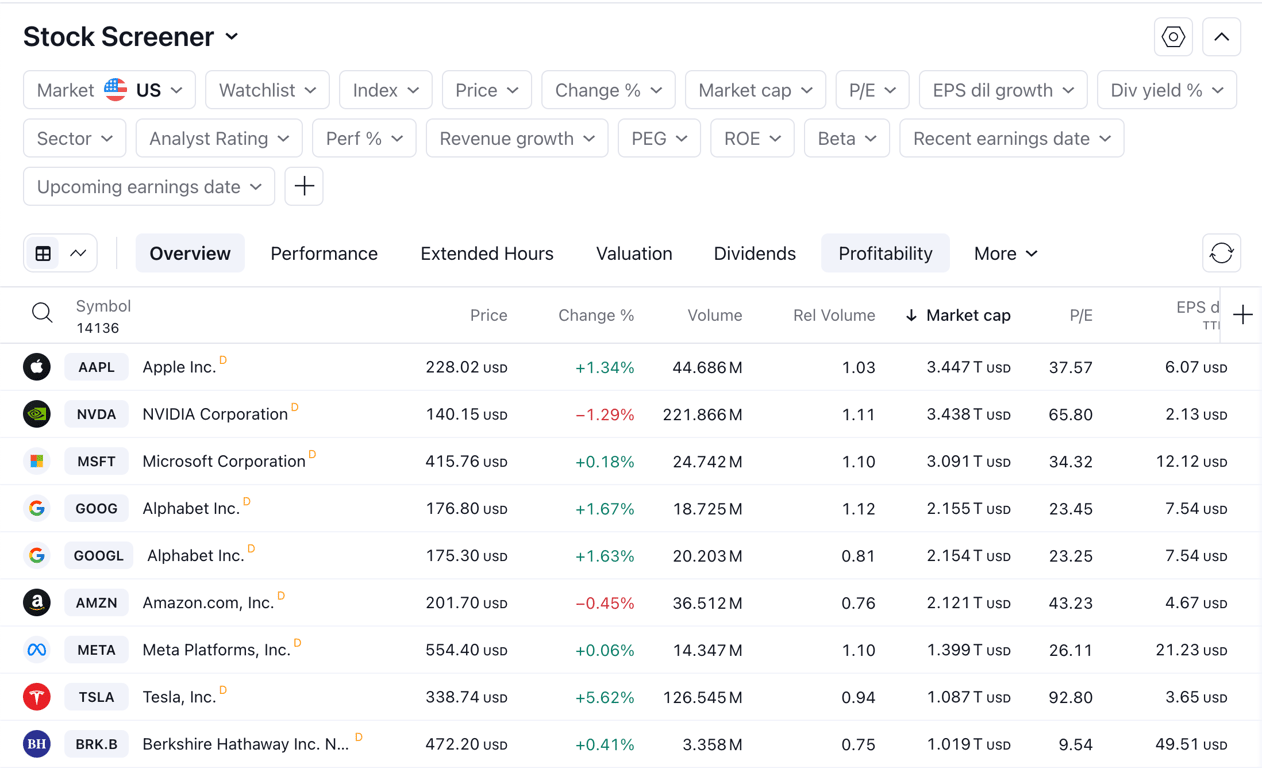
TradingView remains one of the most popular platforms for traders and investors who care about charts, technical analysis, community ideas, alerts, and multi-asset research. Its stock screener works as a standalone tool or alongside TradingView Supercharts, making it especially useful for investors who want to move quickly from a filtered list of stocks into chart analysis.
TradingView’s Stock Screener lets users analyze stocks using ratios, timeframes, indicators, financial metrics, and technical signals. It supports common and preferred stocks, depositary receipts, fundamental metrics, technical analytics, saved screens, export options, and chart/table views.
Key features:
Technical and fundamental filters: Screen by valuation, dividends, growth, margins, ratios, market data, and technical indicators.
Chart-first workflow: Switch between screener results and chart views without leaving the platform.
Multi-market screening: Change regions or select multiple markets for broader research.
Prebuilt screens: Use popular screens to quickly identify market leaders, value candidates, dividend stocks, and momentum ideas.
Custom screens: Save personalized screens for repeated use.
Asset-class ecosystem: TradingView also offers screeners for ETFs, bonds, crypto coins, CEX pairs, DEX pairs, and Pine-based scanning.
Community layer: Traders can review public ideas, scripts, indicators, and market commentary.
Pros:
Excellent for technical traders and chart-focused investors.
Powerful combination of stock screening and charting.
Large community of traders, scripts, and ideas.
Strong multi-asset ecosystem.
Flexible interface for both beginners and advanced users.
Cons:
Can feel overwhelming for beginners who only want simple fundamental filters.
Some advanced charting, alerts, and workflow features require paid plans.
Exchange data availability and real-time data may depend on subscription and data add-ons.
Pricing
TradingView has a free Basic tier and paid subscriptions. Current annual pricing lists Essential at $12.95/month, Plus at $29.95/month, and Premium at $59.95/month, with plan limits varying by charts per tab, indicators, alerts, historical bars, and support level.
Best for
TradingView is best for traders and investors who want a stock screener tightly connected to advanced charts, alerts, technical indicators, and market communities.
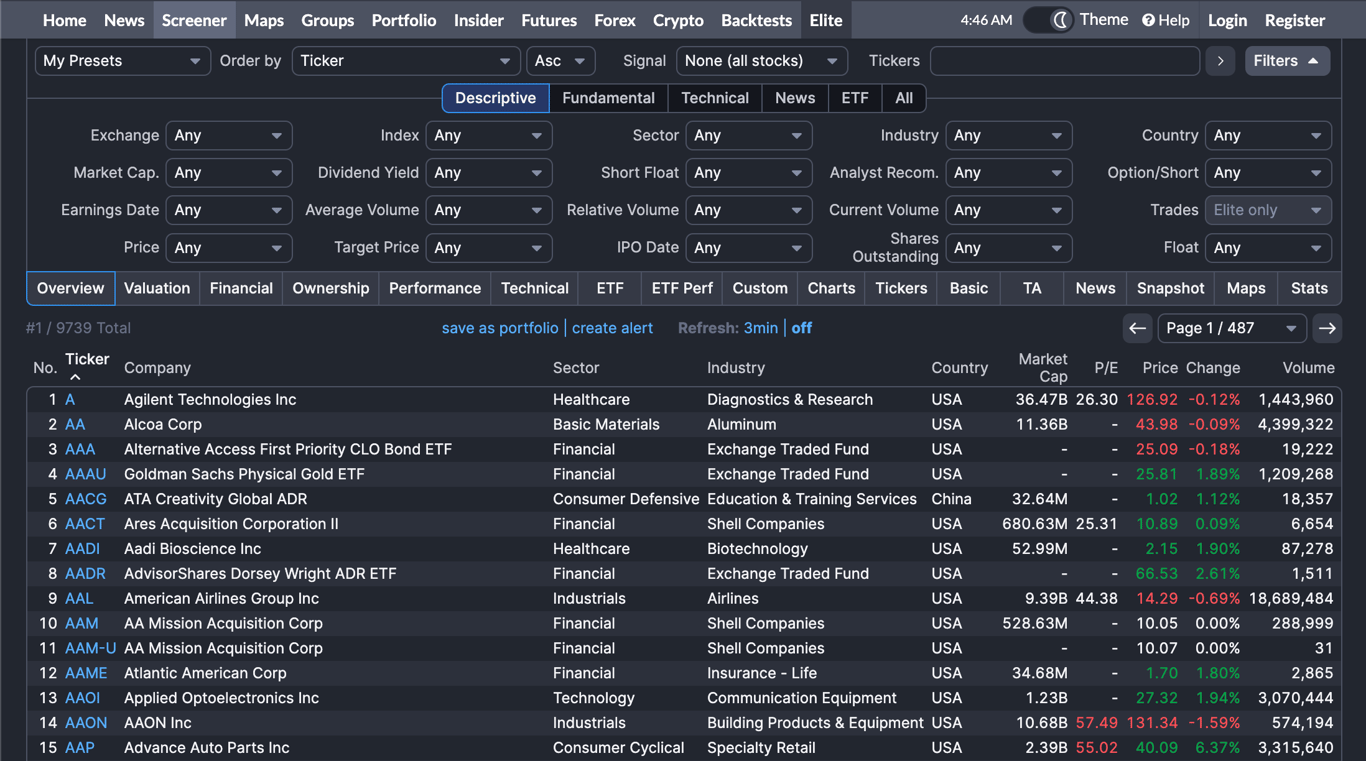
Finviz is one of the best-known stock screeners for investors who want fast, visual market scanning. Its interface is built around simplicity: filter the market, scan heatmaps, compare sectors, inspect charts, and quickly identify stocks that match your criteria.
Finviz is especially popular among active investors who like combining fundamental filters with technical signals. The free version is useful for quick research, while Finviz Elite unlocks real-time data, advanced screeners, charts, alerts, exports, APIs, and an ad-free experience.
Key features:
Fast stock screening: Filter stocks by valuation, performance, financials, technicals, ownership, analyst data, and more.
Visual market maps: Use heatmaps to quickly understand sector and market movement.
Real-time data in Elite: Elite plans include real-time quotes and charts.
Alerts: Set email and push notifications for stocks, news, ratings, insider transactions, SEC filings, and price movements.
Exports and APIs: Export screener data and automate workflows through API access.
ETF data: Elite includes deeper ETF holdings and performance metrics.
Pros:
One of the fastest screeners for quick idea generation.
Strong visual tools for sector and market scanning.
Free plan is useful for many investors.
Elite adds real-time data, alerts, exports, and advanced filters.
Good balance of technical and fundamental filters.
Cons:
Mostly focused on U.S. markets.
Interface is efficient but can feel dense or dated.
Free data is delayed.
Some of the best functionality is locked behind Elite.
Pricing
Finviz offers a free account and a free 7-day Elite trial. Finviz lists Elite pricing as $39.50/month or $299.50/year, with a current first-year promotional price of $199.50 shown on its Elite page at the time of review.
Best for
Finviz is best for investors who want a fast, visual, U.S.-focused stock screener with strong technical and fundamental filtering.
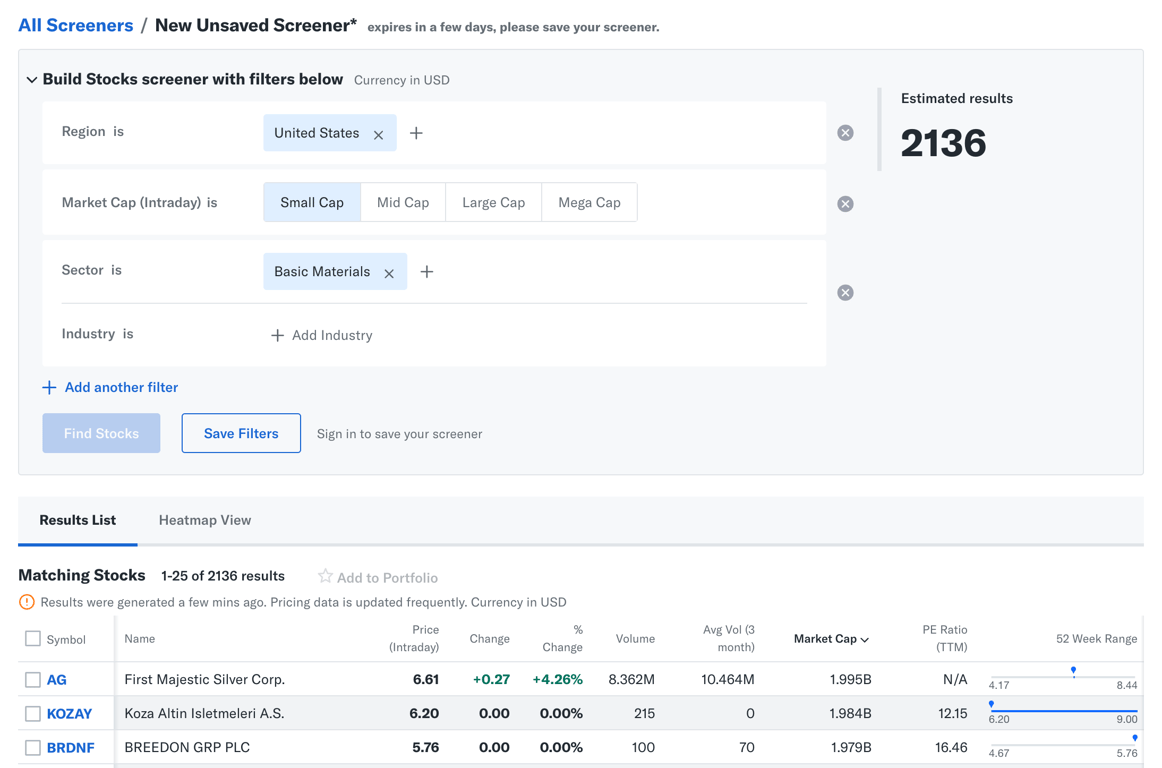
Yahoo Finance is one of the most recognizable names in online market data. Many investors already use it for quotes, charts, news, earnings, portfolios, and watchlists, which makes its screener a natural fit for casual and intermediate investors.
Yahoo Finance’s screener experience is useful because it lives inside a broader market information ecosystem. You can screen stocks, review news, compare financials, follow watchlists, and monitor portfolios without jumping between multiple websites. Yahoo’s help documentation describes its free plan as including real-time market data, up to 5 years of financials, 100+ exchanges worldwide, charts, watchlists, alerts, stocks, ETFs, crypto, and more.
Key features:
Free market data and watchlists: Track stocks, ETFs, crypto, and more.
Stock, ETF, and mutual fund screeners: Search for assets using Yahoo Finance’s research hub.
Portfolio tools: Monitor holdings, returns, diversification, and risk exposure.
Premium plan tiers: Yahoo describes Bronze, Silver, and Gold plans, with higher tiers adding features such as analyst ratings, premium news, research reports, smart screeners, technical events, chart patterns, and downloadable historical data.
News integration: Yahoo Finance combines screening with a strong financial news feed.
Beginner-friendly layout: Familiar interface for investors who already use Yahoo Finance.
Pros:
Easy to use and widely recognized.
Good for beginners and casual investors.
Strong mix of market data, news, charts, and portfolio tools.
Free plan includes useful market data and watchlists.
Premium tiers add more research and screening functionality.
Cons:
Not as customizable as dedicated advanced screeners.
Interface can feel busy because it combines news, ads, data, and tools.
Advanced screeners and historical data are tied to premium tiers.
Serious technical traders may outgrow it.
Pricing
Yahoo Finance offers a free plan and paid Bronze, Silver, and Gold tiers. Yahoo’s help page directs users to its premium subscription pages for current pricing and describes the Gold plan as including smart screeners, premium charts, technical event tools, and 40+ years of downloadable data.
Best for
Yahoo Finance is best for casual to intermediate investors who want a familiar stock screener connected to news, watchlists, charts, and portfolio tracking.
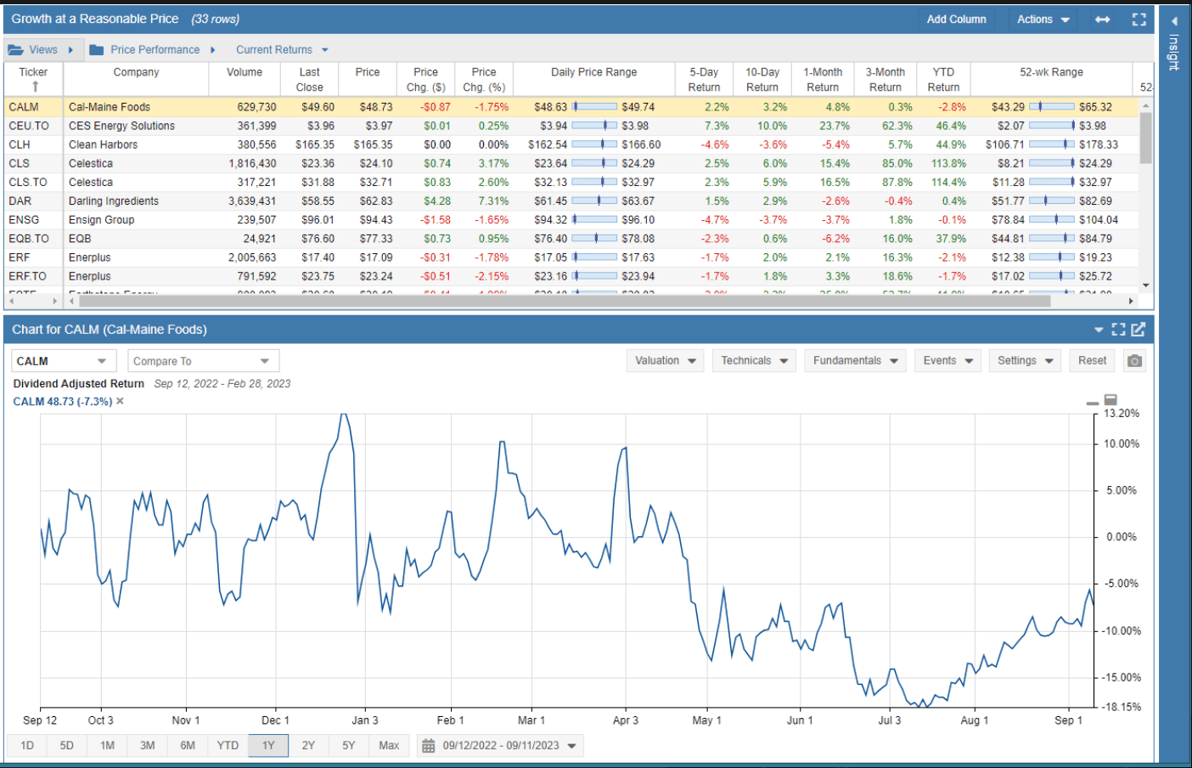
Stock Rover is a deep fundamental research platform designed for investors who want to go beyond basic stock filters. It is especially strong for long-term investors, dividend investors, value investors, ETF researchers, and anyone who wants detailed metrics, scoring, screening, portfolio analytics, and research reports.
Stock Rover’s pricing page describes its platform as offering flexible plans for investors, including powerful stock screening, research tools, portfolio management, broker integrations, real-time alerts, historical pricing, financial metrics, and ETF screening depending on plan level.
Key features:
Deep fundamental screening: Screen across hundreds of financial metrics.
Stock and ETF coverage: Premium plans include thousands of stocks, ETFs, and funds.
Historical fundamentals: Paid plans include 5-year, 10-year, or 20-year fundamentals depending on tier.
Portfolio management: Brokerage integration and portfolio analytics are included in paid plans.
Research reports: Higher-tier plans include research reports for thousands of stocks.
Custom metrics: Advanced plans allow custom metrics and ranked screening.
Alerts: Real-time text and email alerting is available in paid plans.
Pros:
Excellent for fundamental investors.
Strong portfolio analytics and broker integration.
Good for dividend, value, growth, momentum, and quantitative strategies.
Advanced metrics and historical data support deeper due diligence.
Useful for comparing stocks and ETFs.
Cons:
Can be overwhelming for beginners.
Less visually modern than some newer tools.
Best features are in paid plans.
More suited to fundamental research than fast technical trading.
Pricing
Stock Rover offers a 14-day free trial. Its annual billing page lists Premium at $29/month, Premium Plus at $49/month, Ultimate at $79/month, and Ultimate Pro at $149/month, with monthly and two-year billing alternatives also available.
Best for
Stock Rover is best for long-term investors who want detailed fundamental screening, portfolio analysis, ETF research, and customizable investment metrics.
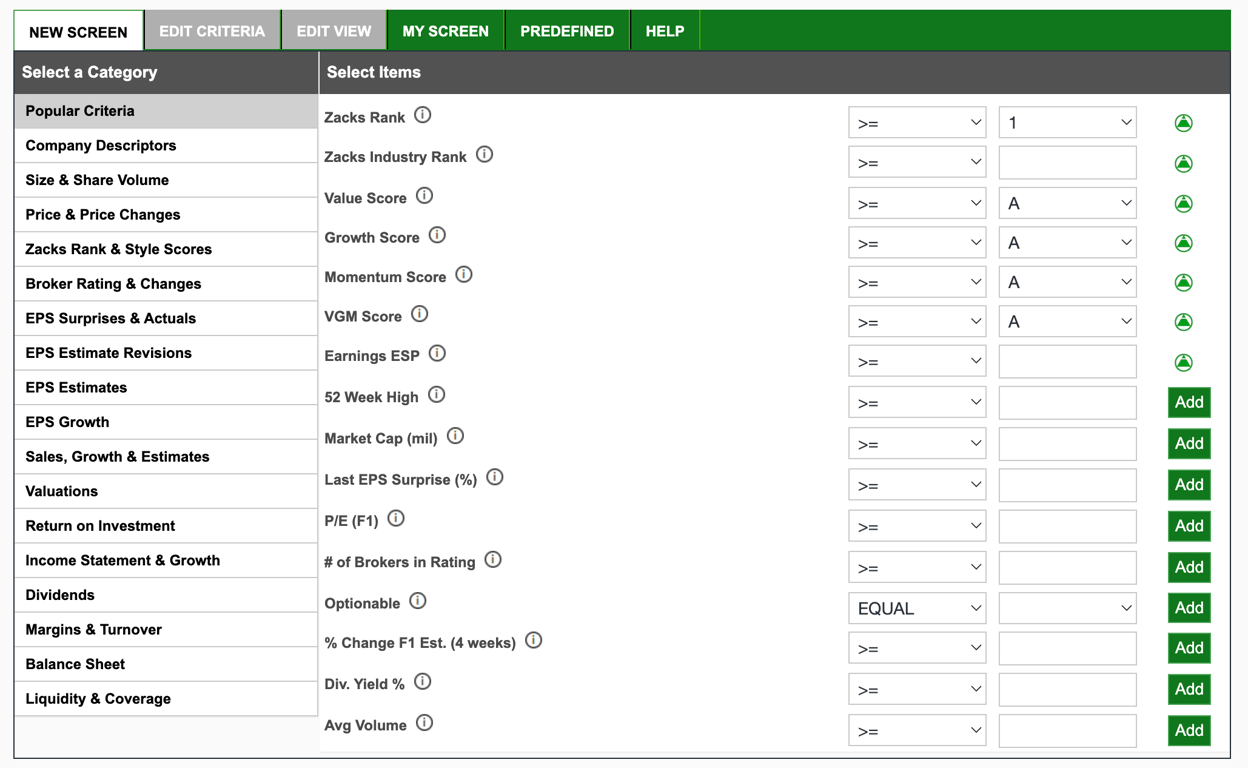
Zacks Investment Research is known for its earnings-focused methodology, stock rankings, research reports, and premium screens. The Zacks Stock Screener is useful for investors who want to filter stocks based on earnings estimates, growth, value, momentum, and Zacks-style ranking systems.
Zacks’ stock screener is positioned as a tool for picking stocks using multiple selection criteria or predefined stock screens. Its product listings also show Zacks Premium as a paid research subscription that unlocks additional tools and resources.
Key features:
Predefined stock screens: Quickly start from Zacks-created screens.
Custom screening criteria: Filter based on factors relevant to your strategy.
Zacks Rank integration: Use Zacks’ proprietary ranking framework as part of your research.
Earnings-focused research: Useful for investors who follow earnings estimate revisions.
Premium screens: Paid members get access to more advanced screening tools and research.
Research reports: Zacks Premium includes deeper reports and stock lists.
Pros:
Strong fit for investors who care about earnings estimate revisions.
Prebuilt screens make the platform easier to start using.
Zacks Rank can be a useful additional research input.
Good for growth, value, momentum, and income-oriented screens.
Longstanding brand in investment research.
Cons:
Interface can feel less modern than newer platforms.
Zacks’ methodology should be treated as a research input, not a standalone buy signal.
Premium features require subscription.
Less flexible for technical chart-first traders.
Pricing
Zacks offers free research access and paid products. Zacks’ product listing shows Zacks Premium at $249/year with a 30-day trial.
Best for
Zacks is best for investors who want an earnings-focused stock screener backed by research reports, rankings, and predefined premium screens.
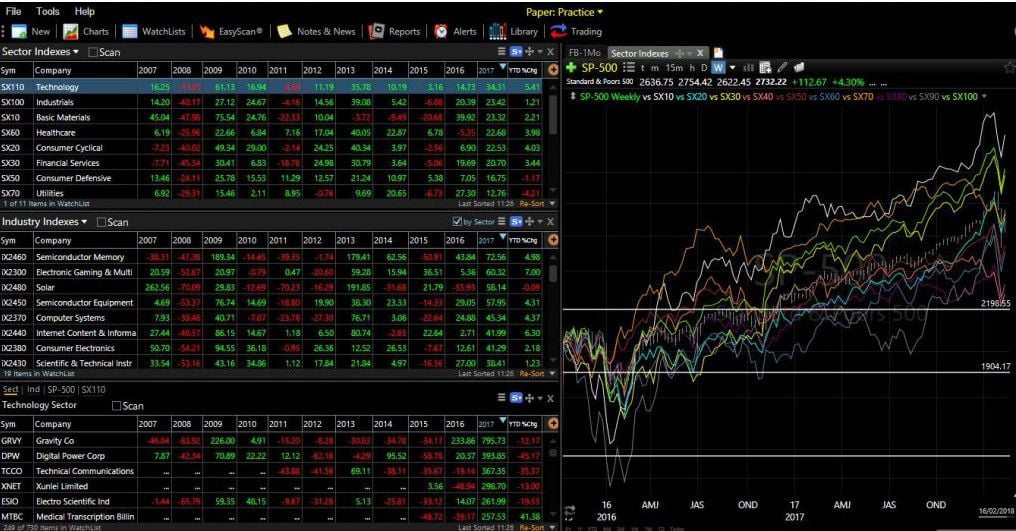
TC2000 is a professional-grade charting and scanning platform built for active traders. It is especially strong for investors who want real-time scans, watchlists, chart-based filters, options tools, custom formulas, and fast technical workflows.
Unlike many stock screeners that are primarily web-based research tables, TC2000 feels more like a trading workstation. Its Premium plan includes real-time scanning and sorting, EasyScan, personal criteria formulas, drawing tools, watchlist customization, and multi-monitor workflows.
Key features:
Real-time U.S. stock data: Basic includes real-time U.S. stock data from NYSE, Amex, and Nasdaq through Nasdaq Basic.
Stock and option charting: Fast charting for stocks and options.
Live streaming watchlists: Watchlists update as market data flows.
Real-time scanning: Premium adds real-time scanning and sorting across thousands of stocks.
EasyScan Wizard: Build scan conditions using indicators, charts, and formulas.
Personal Criteria Formulas: Create custom formulas and conditions.
Paper trading: Practice trades with real-time data.
Multi-monitor support: Useful for active trading setups.
Pros:
Excellent for active traders and technical scanners.
Strong real-time scanning workflow.
Custom formulas give advanced users more control.
Works well for chart-driven trading routines.
Includes stock and options functionality.
Cons:
Higher learning curve than beginner-friendly web screeners.
Less ideal for investors who only want simple fundamental research.
Pricing is higher than basic screeners.
Some optional data feeds cost extra.
Pricing
TC2000 lists three main software plans: Basic at $24.99/month, Premium at $49.99/month, and Premium+ at $99.99/month. Optional data feeds, such as real-time U.S. indexes and options, are billed separately.
Best for
TC2000 is best for active traders who need real-time scanning, customizable formulas, charting, watchlists, alerts, and options-aware workflows.
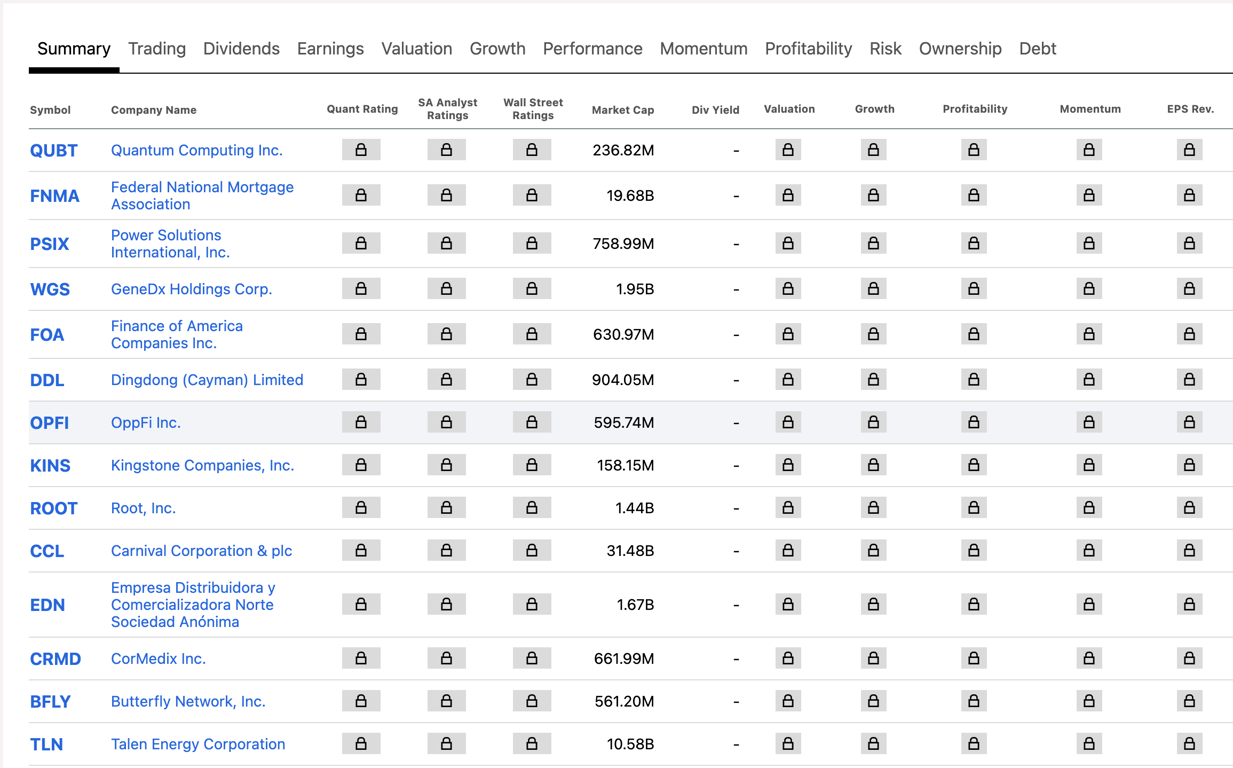
Seeking Alpha combines stock screening with analyst articles, Quant Ratings, Factor Grades, author opinions, Wall Street ratings, portfolios, alerts, earnings transcripts, and investor commentary. It is not just a screener; it is a research ecosystem.
The Seeking Alpha stock ratings screener is designed to help Premium subscribers discover stocks using Quant Ratings, Factor Grades, Seeking Alpha author ratings, and Wall Street ratings. The platform also supports filters for company details, sector, industry, ratings, quants, trading, dividend grades, earnings, and more.
Key features:
Quant Ratings: Screen stocks using Seeking Alpha’s quantitative rating system.
Factor Grades: Filter by value, growth, profitability, momentum, and EPS revisions.
Author and Wall Street ratings: Combine quantitative data with analyst perspectives.
Predefined screeners: Start from prepared screens instead of building from scratch.
ETF screener: Filter ETFs by Quant Ratings, author recommendations, performance, expenses, and other metrics.
Portfolio tools: Premium includes broker linking, portfolio health score, custom portfolio views, and alerts.
Pros:
Strong blend of quantitative and qualitative research.
Useful for investors who like reading investment theses alongside data.
Quant Ratings and Factor Grades create a simple screening framework.
Premium includes portfolio tools and alerts.
Large contributor ecosystem.
Cons:
Can feel information-heavy for beginners.
Contributor opinions vary in quality and style.
Premium subscription is required for many of the best features.
Investors should avoid treating ratings as automatic buy or sell instructions.
Pricing
Seeking Alpha’s Premium price update page states that Premium renews at $299/year plus applicable tax/VAT.
Best for
Seeking Alpha is best for investors who want a stock screener combined with Quant Ratings, factor grades, analyst commentary, financials, transcripts, and portfolio alerts.
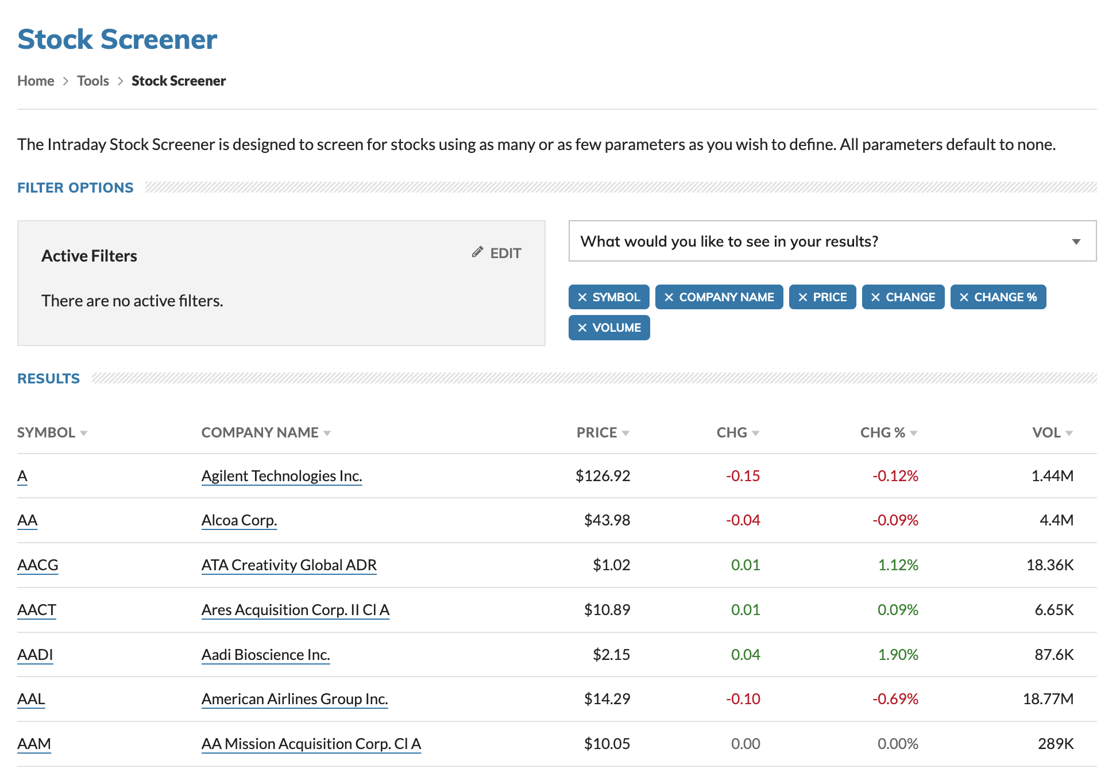
MarketWatch is best known as a financial news and market data website, but it also offers a simple stock screener. For investors who want a free, straightforward tool connected to market headlines, quotes, and watchlists, MarketWatch can be a convenient starting point.
The MarketWatch Intraday Stock Screener lets users screen stocks using as many or as few parameters as they want. Available filters include price, volume, P/E ratio, market cap, moving averages, exchange, sector, and industry.
Key features:
Free stock screener: Screen stocks directly on MarketWatch.
Basic fundamental filters: Filter by P/E ratio and market capitalization.
Price and volume filters: Find stocks by price range, percentage movement, volume, and block trades.
Technical filters: Screen relative to 50-day or 200-day moving averages.
Exchange and sector filters: Narrow results by NYSE, Nasdaq, NYSE American, sector, and industry.
Market data tools: MarketWatch also offers tools such as market screeners, premarket/after-hours movers, short interest, earnings calendars, IPO calendars, and watchlists.
News integration: Results sit inside a broader financial news ecosystem.
Pros:
Free and easy to access.
Good for simple screening tasks.
Useful for investors who already read MarketWatch news.
Includes basic technical and fundamental filters.
No complex setup required.
Cons:
Limited compared with dedicated screeners.
Fewer advanced filters and customization options.
Not ideal for deep fundamental research or professional trading workflows.
Interface includes ads and news distractions.
Pricing
The MarketWatch stock screener is available as a free tool on MarketWatch.
Best for
MarketWatch is best for investors who want a free, basic stock screener connected to market news, watchlists, and simple market data tools.
Morningstar Investor is a research platform for investors who care about long-term fundamentals, analyst ratings, valuation, portfolio quality, and disciplined investment selection. It is especially useful for investors who want to evaluate stocks, ETFs, funds, and indexes through Morningstar’s research framework.
Morningstar Investor’s stock, ETF, and fund screener helps users evaluate thousands of securities and indexes, including global investments. Morningstar says users can start from pre-filtered screens or filter by their own criteria using Investor’s 200 unique data points, including Morningstar ratings.
Key features:
Comprehensive investment screener: Screen stocks, ETFs, funds, securities, and indexes.
Morningstar ratings: Use Morningstar’s ratings and valuation tools as part of the research process.
Global investment coverage: Includes global investments, not just U.S. stocks.
Pre-filtered screens: Start with Morningstar-curated screens.
Watchlists: Organize investment ideas and compare securities.
Valuation and performance metrics: Use Morningstar data across company and share-class coverage.
Pros:
Strong for long-term, fundamentals-first investors.
Trusted brand in investment research.
Useful for stocks, ETFs, and funds.
Good watchlist and comparison workflows.
More research-focused than trading-focused.
Cons:
Less suitable for active technical traders.
Paid subscription required for full Investor access.
Not as fast or visual as Finviz or TradingView for quick market scanning.
Some users may prefer more customizable data exports and dashboards.
Pricing
Morningstar Investor lists $249/year, equal to $20.75/month when billed yearly, or $34.95/month on the monthly plan.
Best for
Morningstar Investor is best for long-term investors who want fundamental research, analyst ratings, valuation tools, watchlists, and screening across stocks, ETFs, funds, and indexes.
Quick comparison: best stock screeners in 2026
Stock screener
Best for
Free plan
Starting paid price
Investorean
Broker-aware stock screening and practical investor workflows
Yes
$9.5/month billed yearly
TradingView
Technical analysis, charting, and multi-asset screening
Yes
$12.95/month billed yearly
Finviz
Fast U.S. stock screening and visual market maps
Yes
$39.50/month or $299.50/year
Yahoo Finance
Beginners, watchlists, news, and portfolio tracking
Yes
Bronze/Silver/Gold pricing varies by plan and region
Stock Rover
Fundamental research and portfolio analytics
Trial
$29/month billed yearly
Zacks
Earnings-focused screening and Zacks Rank research
Yes
$249/year for Zacks Premium
TC2000
Real-time scanning for active traders
No full free platform
$24.99/month
Seeking Alpha
Quant Ratings, factor grades, and analyst research
Basic access
$299/year for Premium
MarketWatch
Simple free screening and market news
Yes
Free screener
Morningstar Investor
Long-term fundamentals, ratings, stocks, ETFs, and funds
Trial
$249/year or $34.95/month
How to choose the best stock screener in 2026
The best stock screener depends on your strategy. A day trader, dividend investor, value investor, and beginner will not need the same filters or workflow.
Choose Investorean if you want a modern, beginner-friendly stock screener with broker-aware results, portfolio tools, and ready-to-use filters.
Choose TradingView if charts, alerts, technical indicators, and multi-asset analysis are central to your process.
Choose Finviz if you want fast, visual stock screening for U.S. equities.
Choose Yahoo Finance if you want a familiar all-in-one place for news, watchlists, portfolios, charts, and basic screening.
Choose Stock Rover if you want deep fundamental data, historical metrics, portfolio analytics, and ETF research.
Choose Zacks if you are interested in earnings revisions, predefined screens, and Zacks Rank-based research.
Choose TC2000 if you need real-time scanning, watchlist sorting, custom formulas, and active trading tools.
Choose Seeking Alpha if you want Quant Ratings, factor grades, analyst articles, transcripts, and portfolio alerts in one research platform.
Choose MarketWatch if you want a simple, free, no-frills screener connected to market news.
Choose Morningstar Investor if you are focused on long-term fundamentals, analyst ratings, valuation, ETFs, funds, and portfolio-quality research.
Frequently asked questions
What is the best stock screener in 2026?
The best stock screener in 2026 depends on your investing style. Investorean is a strong choice for investors who want broker-aware screening and practical investor tools. TradingView is excellent for chart-based technical analysis. Stock Rover and Morningstar Investor are strong for fundamental research. Finviz is great for fast visual screening, while TC2000 is best for active real-time scanning.
What is the best free stock screener?
Investorean, TradingView, Finviz, Yahoo Finance, MarketWatch, and Zacks all offer useful free access in different ways. For beginners, Yahoo Finance and MarketWatch are easy starting points. For more advanced investors, Investorean, TradingView, and Finviz offer more flexible screening workflows.
What is the best stock screener for beginners?
Investorean is a strong beginner-friendly choice because it combines a clean interface, screeners, watchlists, portfolios, broker-supported research, and ready-to-use filters. Yahoo Finance and MarketWatch are also easy for beginners because they are familiar and simple.
What is the best stock screener for technical analysis?
TradingView and TC2000 are two of the best stock screeners for technical analysis. TradingView is ideal for charting, indicators, alerts, and multi-asset research, while TC2000 is better for real-time scans, custom formulas, and active trading workflows.
What is the best stock screener for fundamental analysis?
Stock Rover, Morningstar Investor, Seeking Alpha, and Investorean are strong choices for fundamental analysis. Stock Rover is especially deep on metrics and portfolio analytics, Morningstar Investor is strong for analyst-style research and ratings, Seeking Alpha combines Quant Ratings with analyst commentary, and Investorean offers practical filters for retail investors.
Are stock screeners enough to make investment decisions?
No. A stock screener is a research tool, not a complete investment strategy. Screeners help narrow the market, but investors should still review financial statements, valuation, business quality, risks, news, portfolio fit, and personal financial goals before making decisions.
Learn how the CANSLIM method works, what each letter means, and how a CANSLIM screener can help investors find growth-stock candidates more efficiently
Can’t find a ticker on eToro? Learn why some stocks are missing, how broker availability works, and how Investorean helps you screen only eToro-supported stocks.
Learn how to use Investorean’s Asset Seasonality Screener to scan stocks, ETFs, crypto, indices, and forex by month, compare 5Y/10Y/20Y trends, and find setups